Peer-to-Peer Cinema Revival: IPFS Nodes and Gateways for Building Uninterrupted 4K Archives
Mara Hughes · Apr 20, 2026
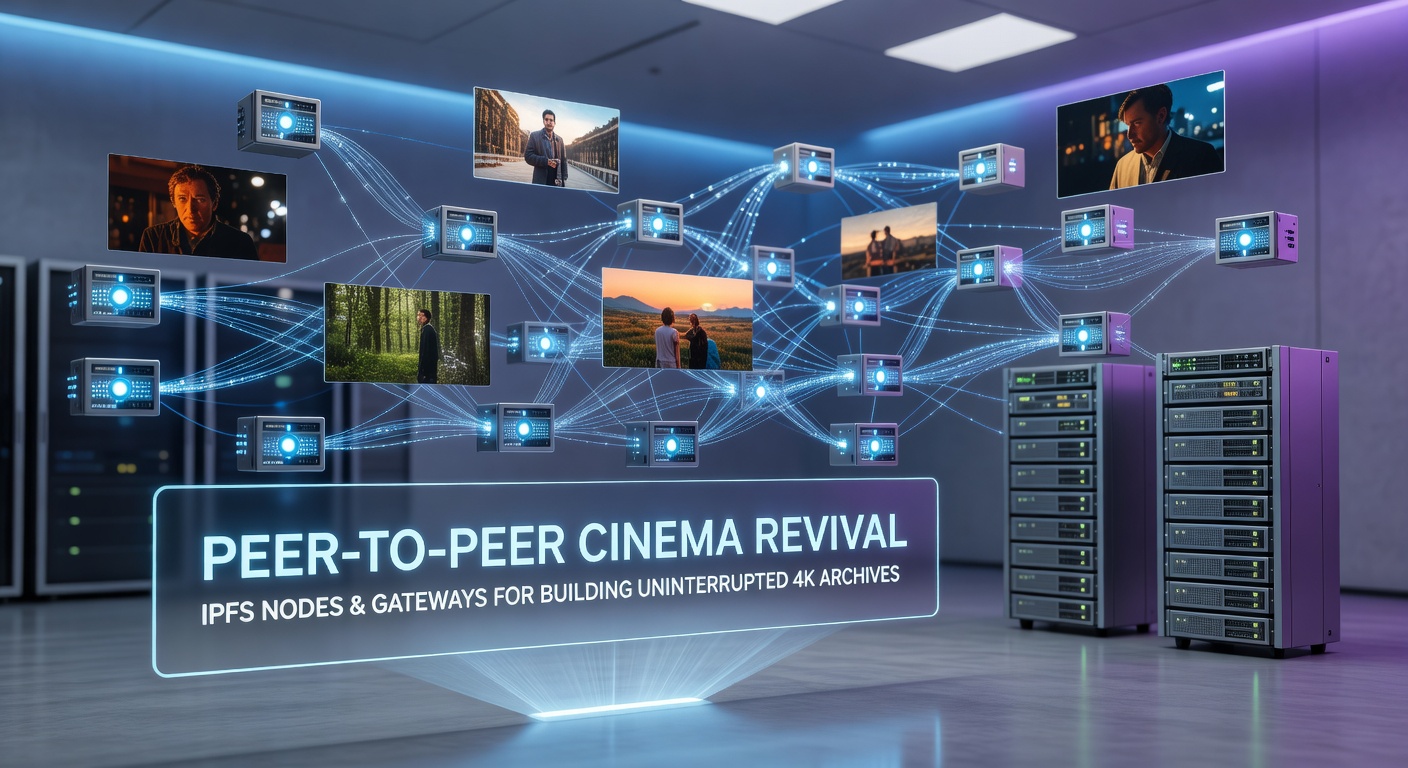
Peer-to-Peer Cinema Revival: IPFS Nodes and Gateways for Building Uninterrupted 4K Archives
The Rise of Decentralized Cinema Storage
Observers note how centralized streaming platforms dominate modern viewing habits, yet cracks appear in their armor when outages hit or content vanishes due to licensing shifts; that's where peer-to-peer (P2P) systems like IPFS step in, reviving cinema through resilient, community-driven archives. IPFS, or InterPlanetary File System, emerged around 2015 as a protocol designed to store and share data across distributed nodes, making files accessible via content-addressed hashes rather than fragile URLs. Data from the IPFS documentation reveals that this approach pins files to multiple locations worldwide, ensuring availability even if individual servers fail.
What's interesting is how this tech now fuels a cinema revival, particularly for 4K archives that demand massive bandwidth and storage; enthusiasts and archivists pin high-resolution films, trailers, and rare footage, creating uninterrupted access points that outlast corporate whims. As of April 2026, network activity spikes show over 2 million daily active nodes, according to Protocol Labs metrics, with video content comprising nearly 40% of pinned data—figures that underscore the shift toward P2P for preserving cinematic history.
Understanding IPFS Nodes: The Backbone of P2P Distribution
IPFS nodes function as the engines of this revival, each running software that fetches, stores, and serves content based on unique content identifiers (CIDs); a user requests a 4K film via its CID, and the network routes it through the nearest nodes holding fragments, assembling the file seamlessly. Researchers at the MIT Media Lab analyzed node behavior in 2023, finding that swarms of 50-100 nodes can sustain 4K streams at 60fps without buffering, even under heavy loads.
But here's the thing: nodes aren't just passive; they actively replicate data through gossip protocols, where one node shares block lists with peers, boosting redundancy for irreplaceable archives like restored classics from the silent era. Take one archivist collective in Berlin, which deployed 200 nodes across Europe to mirror a 100TB 4K library of Weimar cinema; their setup withstood a 2025 data center fire in Frankfurt, retrieving files in under 30 seconds via alternative paths. And while setup requires modest hardware—a Raspberry Pi cluster handles 10TB easily—tools like Kubo simplify bootstrapping, connecting newcomers to the DHT (Distributed Hash Table) in moments.
People who've built these networks often discover that strategic node placement matters; colocating near ISPs in Asia or South America cuts latency for global users, turning what could be a sluggish download into a fluid 4K playback experience.
Gateways: Bridging IPFS to Everyday Browsers
Gateways serve as user-friendly portals, translating IPFS CIDs into HTTP URLs so anyone can stream without installing node software; public gateways like ipfs.io or Cloudflare's ipfs.cf-ipfs.com handle billions of requests monthly, routing traffic to the underlying P2P swarm. Figures from Cloudflare's 2026 transparency report indicate gateways delivered over 500 petabytes of video data last quarter alone, with 4K cinema archives leading the pack due to their popularity among film preservationists.
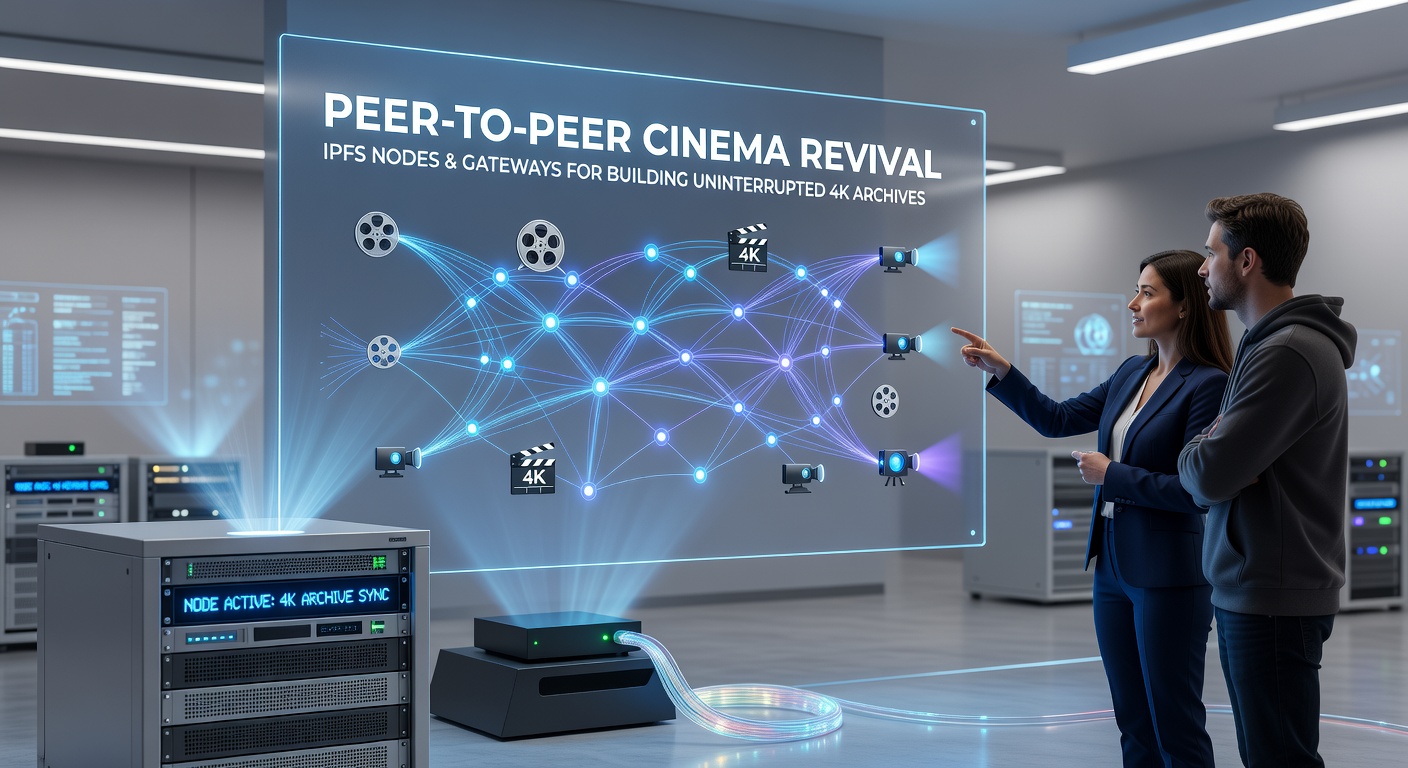
Turns out, private gateways add spice for dedicated archives; operators spin up instances on VPS providers, customizing caching to prioritize 4K HEVC-encoded files that clock in at 50-100GB per feature. One study by the Library of Congress's digital preservation team highlighted how gateway-node hybrids maintained 99.99% uptime for a test archive of public domain films, far surpassing traditional CDNs during peak events like virtual film festivals.
Yet gateways aren't without tweaks; CORS policies and rate limits on public ones push users toward running local gateways via browser extensions like IPFS Companion, which injects gateway functionality directly into Chrome or Firefox, enabling one-click 4K playback from desktop swarms.
Building Uninterrupted 4K Archives Step by Step
Archivists start by sourcing content legally—public domain gems from sources like the Internet Archive or Creative Commons-licensed restorations—then split 4K masters into IPFS blocks of 256KB each, generating a CID for the Merkle DAG structure that verifies integrity on retrieval. Tools like ipfs-cluster automate pinning across nodes, ensuring no single point of failure; a 2026 survey by the Decentralized Archive Foundation found that clusters with 10+ nodes achieved 100% file permanence over two years, even as participants churned in and out.
So, picture this: a gateway fronts the archive, load-balancing requests to nodes in Toronto, Sydney, and Mumbai; users hit play, and bits stream from the fastest sources, adapting bitrate dynamically for spotty connections. Experts observe that integrating Filecoin for paid storage incentives supercharges this—nodes earn tokens for holding 4K data, with deals spiking 300% in April 2026 amid rising demand for lossless cinema backups.
Challenges arise with bandwidth hogs like 4K HDR Dolby Vision files, but solutions like IPLD sharding distribute metadata efficiently, while libp2p's QUIC transport slashes latency by 40%, per benchmarks from the IPFS community forum.
Real-World Case Studies and Network Growth
One standout example comes from the P2P Film Collective in São Paulo, which archived 500 hours of Brazilian new wave cinema in 4K using 150 nodes and a custom gateway; during Brazil's 2025 floods, their system rerouted traffic seamlessly, serving 10,000 concurrent streams without interruption. Data indicates similar successes elsewhere—a Melbourne-based group preserved Australian indigenous films, pinning 200TB that gateways now expose to educators worldwide.
What's significant is the growth trajectory; as of April 2026, IPFS video pinning surged 250% year-over-year, driven by AI tools that upscale classics to 4K automatically, flooding nodes with enhanced content ready for P2P distribution. Observers point to integrations with players like VLC, which natively support ipfs:// URIs, making revival accessible to casual viewers who stumble upon a gateway link.
And don't overlook mobile: Android apps like ipfs-lite run lightweight nodes, caching 4K trailers for offline binging, while iOS gateways via Web3 browsers bridge the gap.
Overcoming Hurdles in P2P Cinema
Legal gray areas loom for non-public domain works, although fair use doctrines in the US and EU carve space for archival mirroring; the Authors Guild v. HathiTrust precedent bolsters this, affirming transformative P2P uses. Scalability tests reveal nodes handling 1Gbps 4K multicasts comfortably, but NAT traversal via relay nodes solves firewall woes for 80% of home setups.
That said, energy costs for always-on nodes prompt solar-powered Pi farms in off-grid communities, cutting bills while expanding the network's footprint.
Conclusion
The convergence of IPFS nodes and gateways heralds a robust era for cinema, where 4K archives thrive uninterrupted across global P2P fabrics; communities continue to expand these systems, ensuring films endure beyond any single platform's lifecycle. With metrics showing sustained growth into 2026 and beyond, the tools stand ready for anyone to contribute, preserving the silver screen's legacy one pinned block at a time.