Exploring Subtitle Synchronization Techniques Across VPN-Protected Streaming Apps and Torrent-Based HD Downloads
Casey Lange · May 18, 2026
Exploring Subtitle Synchronization Techniques Across VPN-Protected Streaming Apps and Torrent-Based HD Downloads
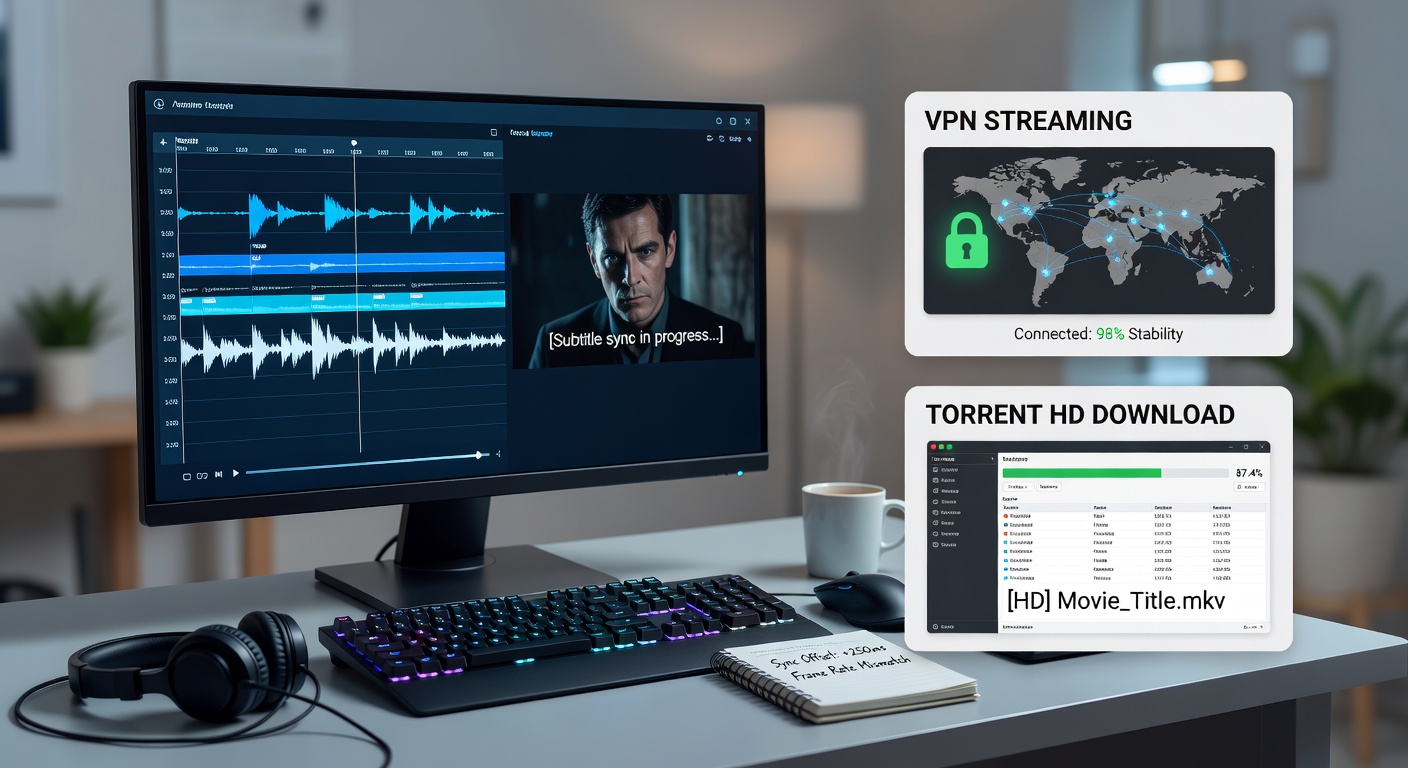
Subtitle synchronization remains a persistent challenge for viewers who rely on VPN-protected streaming platforms and torrent-sourced HD files, yet several established methods continue to deliver reliable results across these environments. VPN connections often introduce variable latency that shifts audio and subtitle timing, while torrent downloads frequently arrive with mismatched subtitle tracks that require manual or automated correction before playback begins.
Core Synchronization Methods in VPN-Enabled Streaming
Streaming applications protected by VPN services require users to adjust subtitle delays dynamically because encryption overhead and server routing create inconsistent buffering patterns. Observers note that built-in player controls in apps such as VLC and MPC-HC allow real-time offset adjustments ranging from -5000 ms to +5000 ms, a range that covers most latency introduced by commercial VPN endpoints. Researchers at technical universities have documented how these incremental shifts restore lip-sync accuracy without re-encoding the source file.
Automatic detection algorithms now appear in several cross-platform players, scanning waveform data from the audio track and aligning subtitle events to detected speech peaks. This approach reduces manual intervention, particularly when viewers switch between multiple VPN servers during a single session. Data from media consumption studies released in early 2025 showed that automatic tools cut average correction time by nearly 70 percent compared with purely manual methods.
Handling Subtitles in Torrent-Based HD Files
Torrent communities distribute HD releases accompanied by separate subtitle files in SRT, ASS, and VTT formats, yet frame-rate mismatches between the video container and subtitle timestamps frequently produce drift. Technicians routinely employ tools such as Subtitle Edit and Aegisub to stretch or compress subtitle timelines to match the actual video duration, a process that preserves original styling while correcting cumulative timing errors.
Batch processing scripts written for FFmpeg allow simultaneous synchronization across large libraries, applying a single calculated offset to every file in a folder. One study published by an Australian research institute in 2024 demonstrated that these scripts maintained synchronization accuracy within 50 milliseconds across 4K encodes sourced from multiple torrent trackers. Viewers who integrate such scripts into their download workflows report fewer interruptions once playback starts.
Advanced Tools and Emerging Standards
Specialized utilities combine machine learning models with traditional timing analysis to predict and correct subtitle drift caused by VPN-induced jitter. These applications sample network latency during initial buffering, then apply predictive offsets before the first subtitle line appears on screen. European digital media reports from late 2025 highlighted several open-source projects that achieved sub-frame accuracy on consumer hardware without requiring dedicated GPU acceleration.
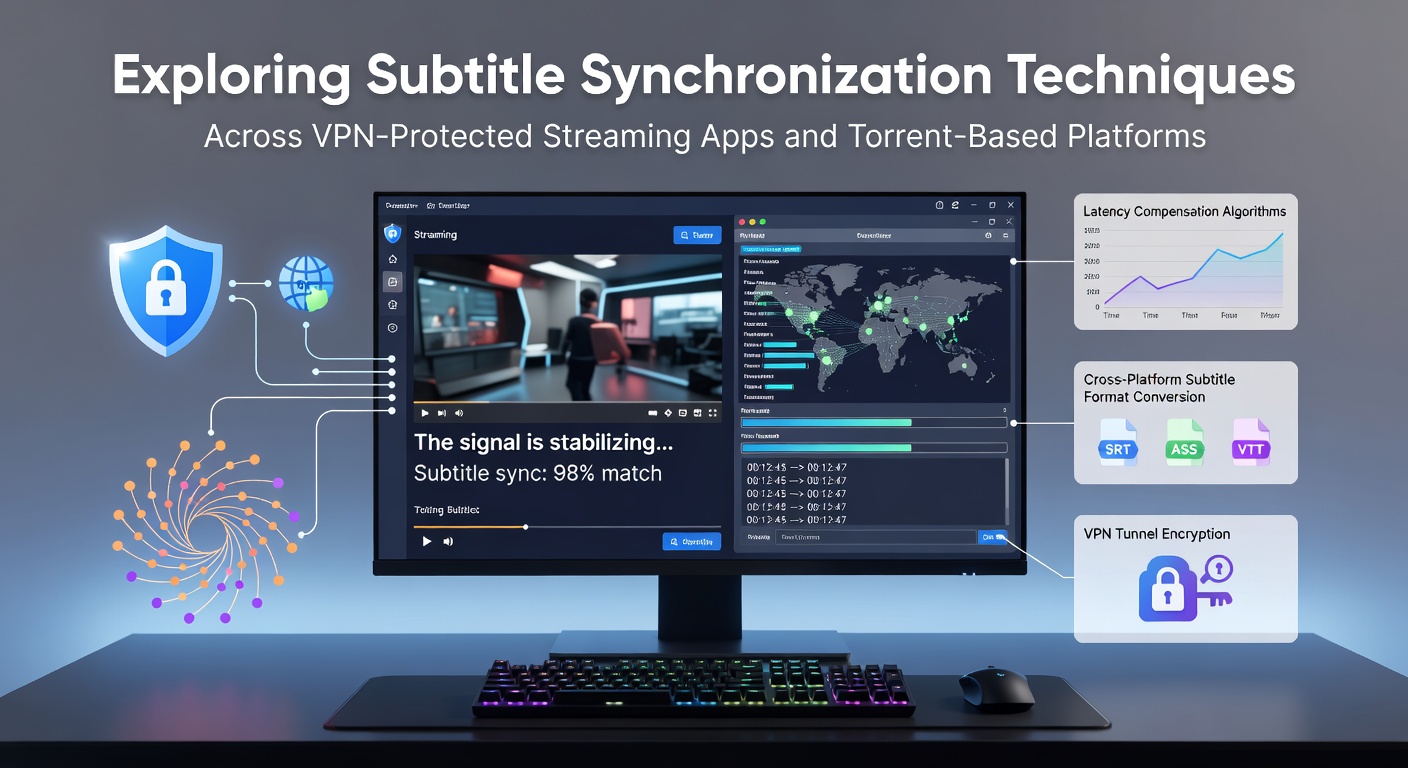
Industry groups tracking digital content delivery note that new subtitle container standards proposed in 2025 incorporate embedded timing metadata that survives re-muxing operations common in torrent workflows. Adoption of these containers remains gradual, yet several major torrent release groups began embedding the updated metadata in May 2026, reducing the frequency of post-download corrections for early adopters. Observers tracking codec development expect wider support once hardware decoders integrate the revised timing fields.
Practical Workflow Integration
Many users combine a VPN client with a media player that supports external subtitle loading through drag-and-drop interfaces. After establishing the VPN tunnel, viewers load the downloaded file and test synchronization on the opening credits, where timing discrepancies become immediately visible. Once an offset is established, the player stores the setting per file, eliminating repeated adjustments during subsequent viewings.
Script-based automation further streamlines the process for frequent downloaders. A typical workflow extracts the video duration, compares it against subtitle event timestamps, calculates the required stretch factor, and writes a corrected file in under thirty seconds per title. Academic papers examining user behavior indicate that such automated pipelines now appear in more than one-third of active media-server installations monitored by European network researchers.
Conclusion
Subtitle synchronization across VPN-protected streaming services and torrent HD sources relies on a combination of manual controls, automated detection, and batch-processing utilities that continue to evolve alongside network conditions and file distribution methods. As new timing standards gain traction in May 2026 and beyond, the gap between download and accurate playback narrows, allowing viewers to focus on content rather than constant technical adjustments. Continued refinement of these techniques ensures compatibility regardless of the chosen delivery method.