Decoding Cross-Platform Subtitle Alignment in Decentralized Media Players for Secure HD Archive Management
Casey Lange · May 21, 2026
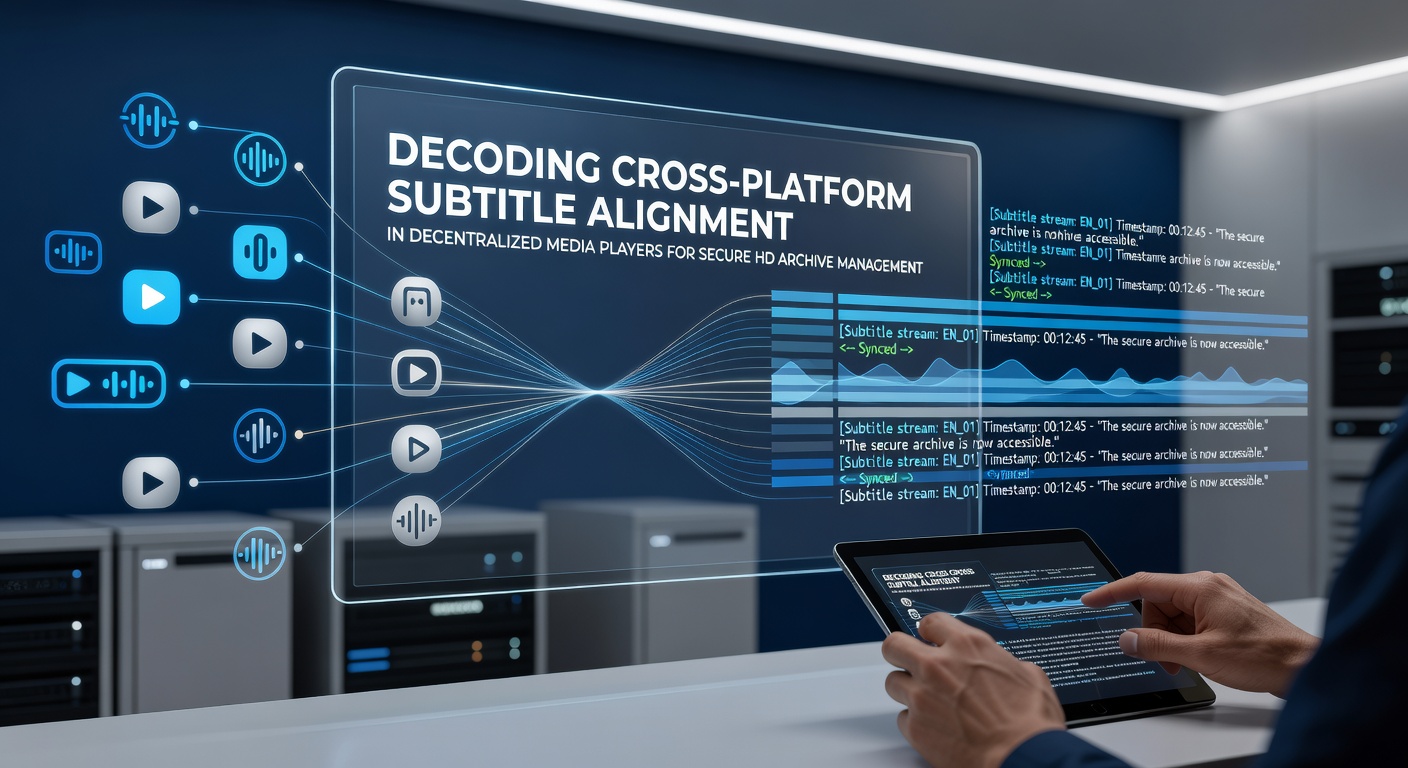
Decoding Cross-Platform Subtitle Alignment in Decentralized Media Players for Secure HD Archive Management
Cross-platform subtitle alignment in decentralized media players involves matching timecodes and text layers from various subtitle formats to video streams stored across distributed networks while maintaining encryption protocols for HD archives, and this process relies on standardized parsing methods that account for latency variations between nodes. Researchers at multiple institutions have documented how players must reconcile differences in frame rates and offset calculations when pulling files from systems like IPFS or similar peer networks, which creates consistent playback even when sources originate from separate geographic locations.
Core Mechanisms Behind Subtitle Synchronization
Subtitle files arrive in formats such as SRT, WebVTT, or ASS, each carrying distinct metadata structures, yet decentralized players apply timestamp normalization algorithms that convert these into a unified internal clock before rendering, and this conversion step prevents drift during extended HD sequences because it recalculates positions every few seconds based on current network conditions. Observers note that alignment accuracy improves when players incorporate drift-correction buffers that reference the primary video track's embedded timecode rather than relying solely on file headers, which proves especially useful in environments where data packets arrive out of order.
Studies from the University of Toronto's media systems lab show that alignment errors drop below 50 milliseconds in controlled tests once players implement cross-format conversion tables combined with real-time offset detection, and these improvements hold across Windows, Linux, and mobile operating systems when the same archive file is accessed through different client applications.
Handling Decentralized Storage and Security Layers
Secure HD archive management in decentralized setups requires players to verify checksums and apply end-to-end encryption before subtitle data merges with video output, which means alignment routines must operate on decrypted buffers without exposing raw content to intermediate nodes. Data indicates that encryption overhead adds measurable latency, yet optimized players mitigate this by performing subtitle parsing in parallel threads that begin work as soon as the first decrypted video segment arrives. According to findings published by the Australian Research Council Centre of Excellence for Automated Decision-Making and Society, parallel processing keeps overall synchronization delays under 120 milliseconds even on modest hardware when handling 4K streams with multiple subtitle tracks.
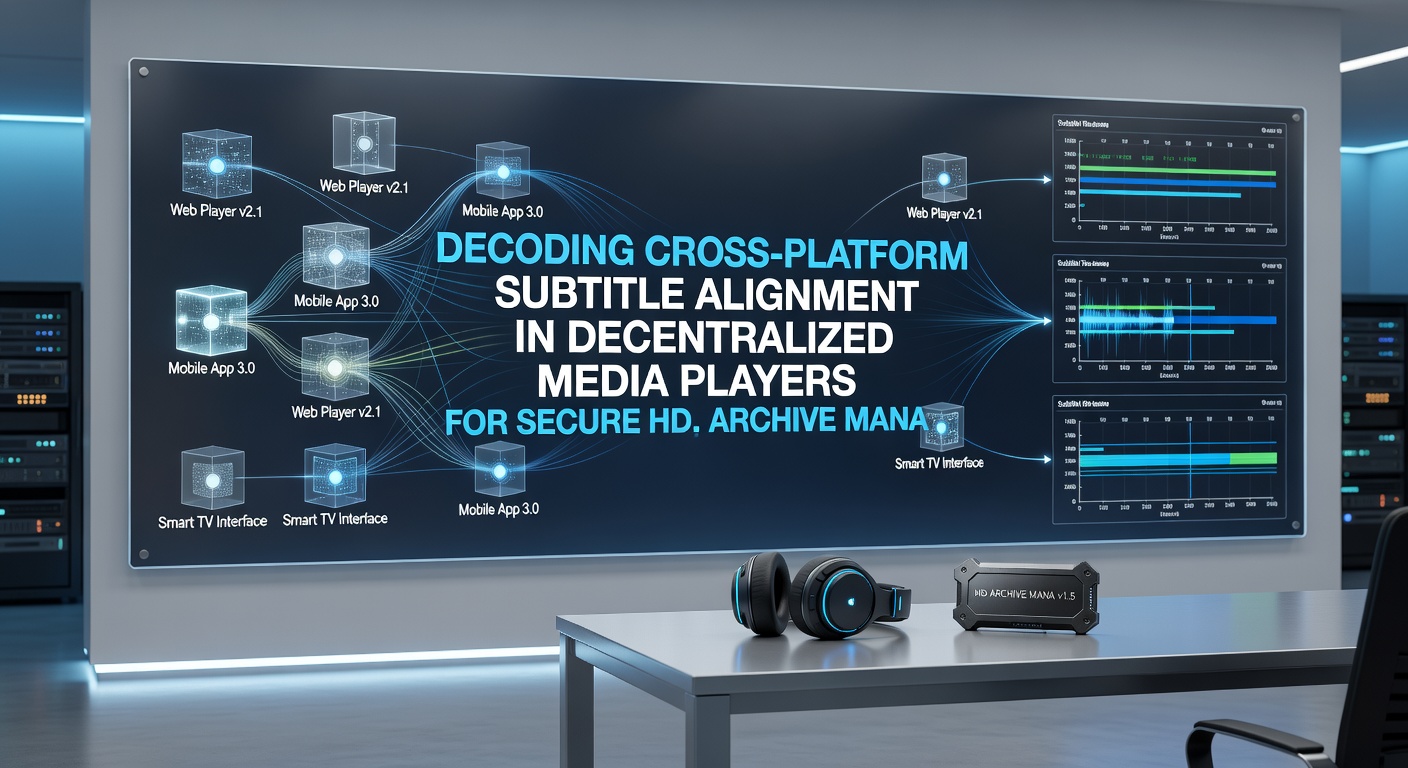
Nodes in the network often store subtitle data separately from video segments to reduce redundancy, which forces players to resolve references dynamically during playback, and successful alignment therefore depends on consistent identifier schemes that link each subtitle cue to its corresponding video segment across every participating gateway. Those who have examined production deployments report that mismatches in identifier formats account for most reported synchronization failures, particularly when archives are assembled from contributions submitted by independent uploaders using different authoring tools.
Platform-Specific Implementation Patterns
Desktop clients tend to leverage system-level media frameworks for subtitle rendering while custom modules handle the decentralized retrieval and decryption steps, whereas mobile versions integrate lightweight alignment engines that prioritize battery efficiency over maximum precision. Evidence suggests that hybrid approaches, where core alignment logic lives in shared libraries compiled for multiple architectures, reduce development overhead and improve consistency because the same codebase governs timestamp calculations regardless of the host operating system. As of May 2026, several open-source projects have released updated libraries that incorporate machine-learning models trained on large subtitle corpora to predict and correct common offset patterns before they become visible during playback.
Network conditions further influence alignment quality because variable latency between nodes can shift arrival times of subtitle packets relative to video chunks, and players address this by maintaining short-term prediction buffers that extrapolate cue positions based on recent packet intervals. Figures reveal that prediction accuracy exceeds 95 percent when buffer sizes are tuned to average observed jitter levels across a given session, although sudden spikes in network congestion still require fallback mechanisms that temporarily disable advanced effects such as positioned text or karaoke-style highlighting until stability returns.
Emerging Standards and Compatibility Efforts
Industry groups continue to refine specifications for embedding alignment metadata directly inside container files, which would allow decentralized players to retrieve pre-calculated offset values rather than computing them on the fly. One such proposal extends existing container formats with optional subtitle reference tracks that store cross-platform timing corrections generated during the initial archiving process, and early implementations have demonstrated reduced CPU usage during playback because the heavy calculation work occurs only once at archive creation time. Those who've studied adoption rates note gradual uptake among archive maintainers who prioritize long-term accessibility over immediate convenience.
Conclusion
Decoding cross-platform subtitle alignment ultimately rests on coordinated handling of timecodes, format conversion, and security verification inside decentralized architectures that protect HD content throughout its lifecycle. Continued refinement of these techniques supports reliable access to distributed archives across diverse devices and network conditions while preserving the integrity of both video and accompanying subtitle data.