Customizing Display Calibration Routines for Accurate Reproduction of Archived Motion Pictures on Mixed Device Setups
Harper Friedrich · Aug 24, 2026
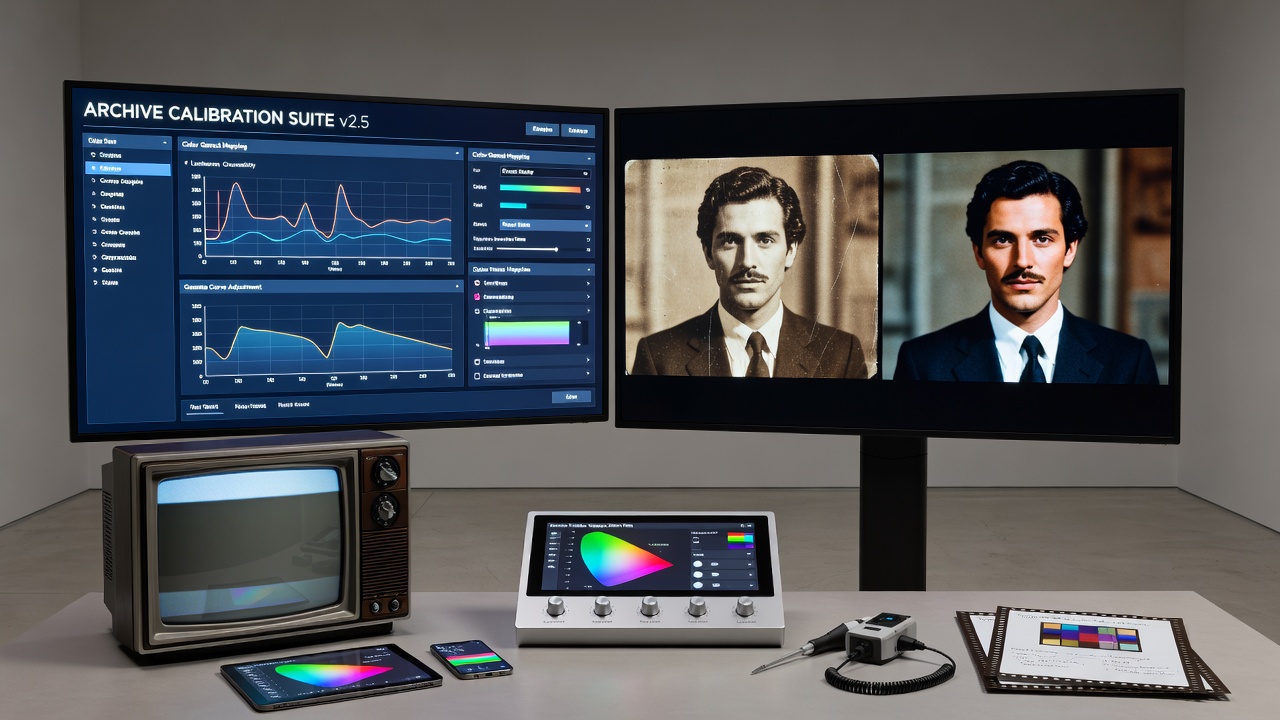
Customizing Display Calibration Routines for Accurate Reproduction of Archived Motion Pictures on Mixed Device Setups
Archived motion pictures require precise color reproduction across varied hardware, and calibration routines address differences in display technologies such as LCD, OLED, and projector systems that handle legacy film scans with specific gamma curves and color gamuts. Researchers at institutions focused on media preservation have documented how custom routines adjust for these variations by incorporating device-specific profiles that maintain consistency in luminance and chromaticity when content moves between setups.
Core Elements of Calibration for Film Archives
Color space conversions form the foundation of these routines, since many archived titles originate in film stocks calibrated to standards like those from the Society of Motion Picture and Television Engineers, while modern devices often default to sRGB or DCI-P3. Data from preservation projects shows that applying lookup tables derived from spectrophotometer measurements reduces delta-E errors below 2.0 across mixed environments, and this approach integrates measurements from hardware like the X-Rite i1Pro alongside software that generates ICC profiles tailored to each output device.
Those working with multi-device collections often combine automated scripts with manual overrides to account for ambient lighting conditions that shift between rooms or viewing stations, and studies indicate that periodic recalibration every six months maintains accuracy as display components age. In practice, routines start with white point alignment to D65 for most archival work, then proceed through grayscale tracking and primary color adjustments that preserve the original intent of cinematographers who shot on analog stock.
Adapting Routines to Mixed Device Configurations
Mixed setups introduce challenges because a single calibration profile rarely transfers directly from a desktop monitor to a television or portable tablet without introducing shifts in saturation or contrast. Observers note that splitting the workflow into device groups allows for separate handling of high-dynamic-range capable screens versus standard dynamic range units, and this segmentation uses tools that export profiles compatible with operating system color management systems like Windows Color System or macOS ColorSync.
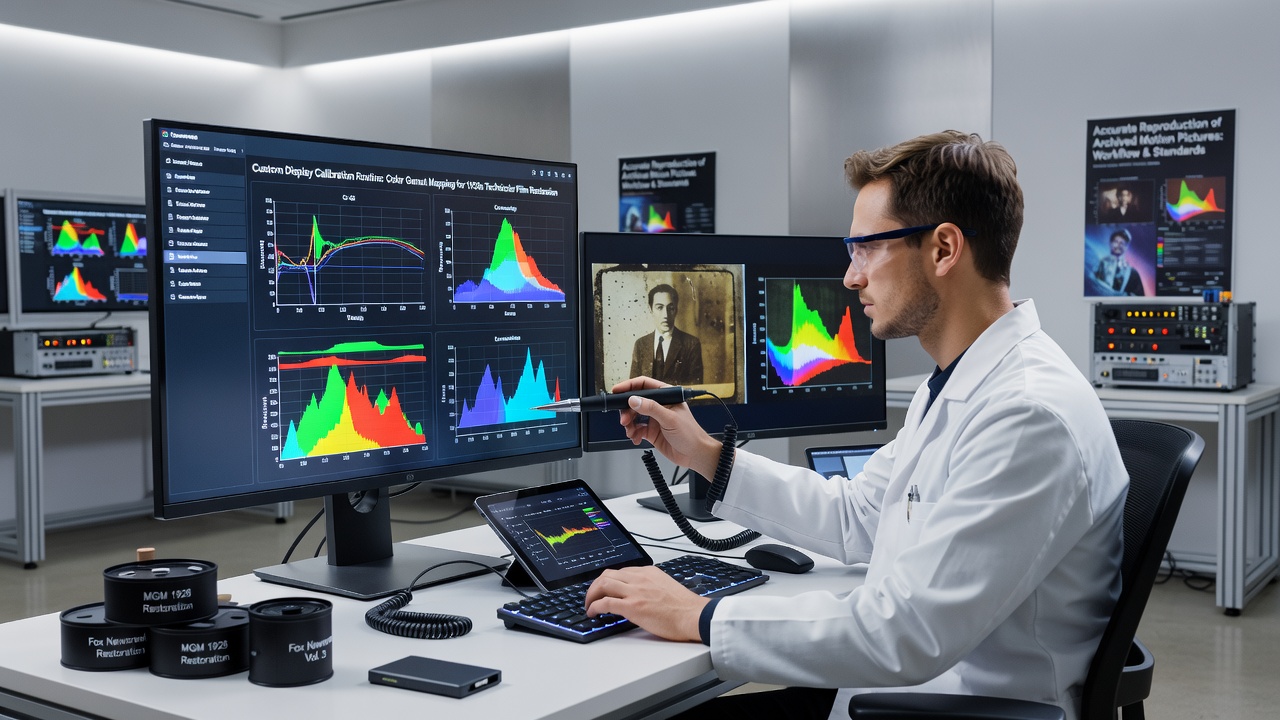
Command line utilities extend this flexibility by enabling batch processing of calibration data across networks, where scripts pull measurements from connected sensors and apply corrections without requiring constant user intervention. Research published through European broadcasting organizations highlights how these automated sequences cut setup time by up to 40 percent when archives contain hundreds of titles that must render consistently on both stationary and mobile hardware.
Integration with August 2026 Software Updates
August 2026 brought refinements to open-source calibration packages that added native support for newer sensor models and expanded gamut mapping algorithms suited to restored film elements. These updates incorporate machine learning models trained on large datasets of historical film scans, allowing routines to predict and correct for device-specific metamerism failures that previously required manual tweaking during playback of titles from the 1950s and 1960s.
Industry reports from standards bodies confirm that compatibility layers added in these releases align with evolving recommendations for archive delivery, and users apply them through configuration files that define priority orders for different display classes. This development supports workflows where content moves from centralized servers to heterogeneous client devices without repeated manual intervention.
Practical Implementation Steps
Implementation begins with hardware verification to ensure sensors remain within tolerance ranges, followed by creation of reference targets drawn from known film elements that include both highlight and shadow detail. Technicians then measure each target display under controlled conditions before generating and validating the resulting profiles through side-by-side comparisons on sample frames.
Scripts can schedule these checks and log deviations over time, providing data that informs when full recalibration becomes necessary rather than relying on fixed intervals. Organizations handling large collections often maintain a central repository of validated profiles that staff reference when adding new devices to existing setups.
Conclusion
Custom calibration routines deliver measurable improvements in fidelity for archived motion pictures viewed across mixed devices by addressing the technical mismatches inherent in diverse display ecosystems. Continued refinement of these methods through updated tools and measurement protocols supports ongoing preservation efforts that prioritize accurate reproduction of original film characteristics.