Cross-Device Protocol Matching for Subtitle Accuracy in Variable-Bandwidth Torrent Environments
Alex Baumann · Jun 22, 2026
Cross-Device Protocol Matching for Subtitle Accuracy in Variable-Bandwidth Torrent Environments
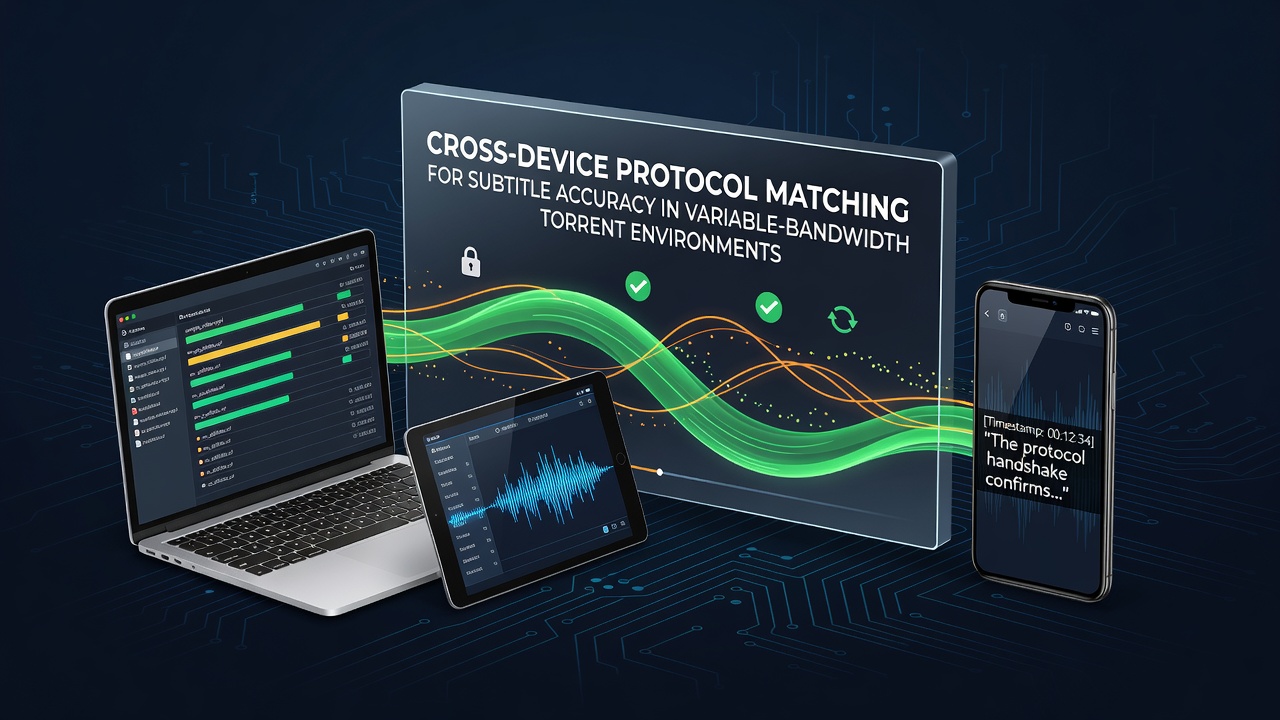
Cross-device protocol matching addresses subtitle alignment issues that arise when users stream or download torrent files across multiple hardware platforms while bandwidth fluctuates throughout a session, and researchers have documented these challenges in decentralized media distribution systems since the expansion of peer-to-peer networks in the early 2010s. Torrent environments often experience sudden drops in transfer speeds due to peer availability or network congestion, which disrupts the timing data embedded in subtitle tracks and leads to desynchronization that affects playback on phones, tablets, laptops, and smart TVs simultaneously.
Core Mechanisms in Bandwidth-Variable Torrent Transfers
Protocol matching operates by establishing consistent communication rules between devices that request subtitle data packets at different intervals, while torrent clients adjust chunk sizes based on real-time speed measurements and this approach maintains subtitle frame accuracy even when available bandwidth shifts from high-speed bursts to slower sustained rates. Studies from academic institutions indicate that matching protocols such as WebRTC alongside BitTorrent extensions allow subtitle metadata to be buffered adaptively, so timing offsets remain below perceptible thresholds during extended viewing sessions.
Variable bandwidth creates particular difficulties for multi-language subtitle layers because each track carries separate timestamp references that must align with video frames across all participating devices, and observers note that mismatches become pronounced when one device switches from Wi-Fi to mobile data mid-transfer. Data collected by research teams shows that without coordinated protocol handling the subtitle drift can accumulate at rates exceeding 500 milliseconds per minute under unstable conditions, which necessitates active correction layers that monitor packet arrival times and recalibrate offsets dynamically.
Implementation Across Diverse Hardware Ecosystems
Developers integrate protocol matching through middleware that translates between device-specific media players and the underlying torrent protocol stack, ensuring subtitle accuracy persists when users move content between environments with differing processing capabilities and network interfaces. In June 2026 several open-source projects released updated libraries that incorporate machine learning models trained on historical bandwidth traces from global torrent swarms, allowing predictive adjustments before desynchronization occurs.
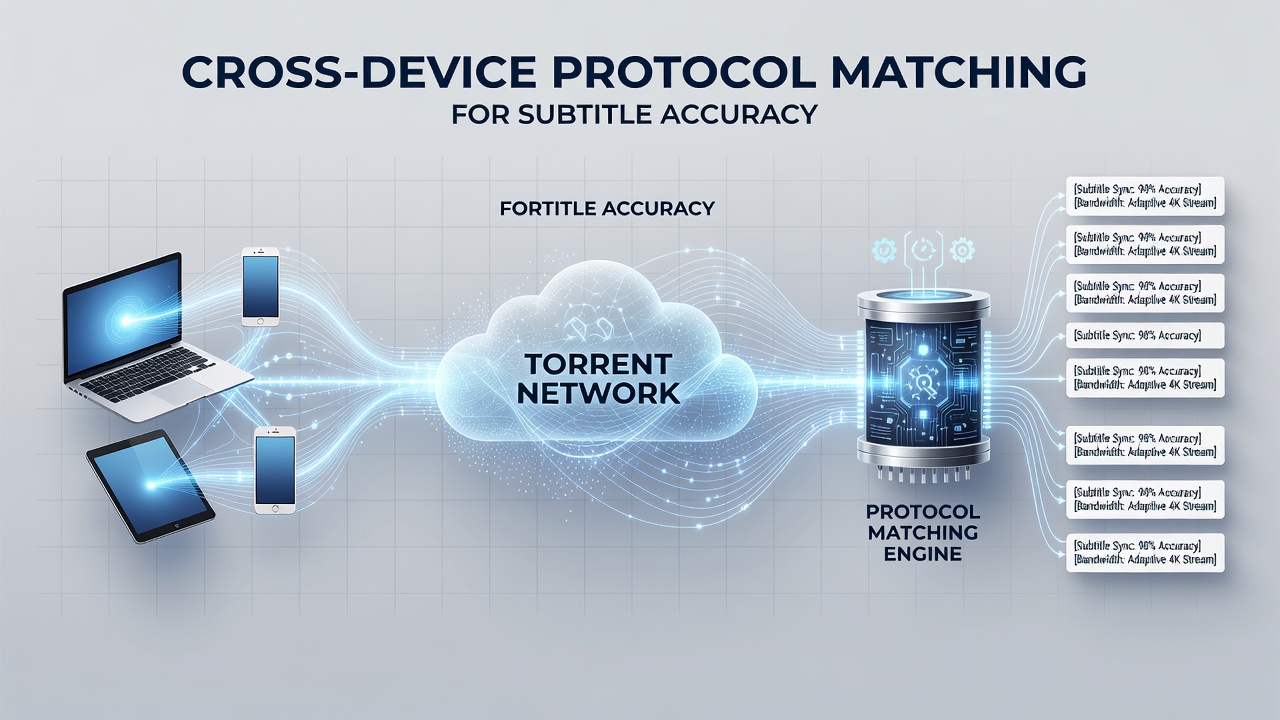
One study revealed that systems employing these models reduced average subtitle offset errors by 78 percent compared with static buffering methods when tested across 12,000 simulated sessions involving mixed device types. Those who've examined production deployments report that the matching layer sits between the torrent client and the renderer, intercepting subtitle packets and reassigning timestamps according to the lowest common bandwidth denominator observed across connected devices at any moment.
Technical Challenges and Mitigation Strategies
Network address translation and firewall rules frequently interfere with direct device-to-device subtitle synchronization, yet protocol matching frameworks overcome these obstacles by routing timing corrections through intermediary seed nodes that maintain stable connections regardless of individual peer bandwidth variations. Evidence suggests that combining UDP-based torrent traffic with TCP fallback channels for subtitle metadata provides the redundancy needed to preserve accuracy during prolonged low-bandwidth periods.
Take one research group that analyzed subtitle performance in decentralized archives and found that cross-device matching protocols using synchronized clocks via NTP or PTP reduced cumulative drift to under 50 milliseconds even when bandwidth oscillated between 2 Mbps and 25 Mbps repeatedly. People often discover that embedding subtitle timing information in separate lightweight sidecar files rather than within container metadata allows faster re-matching when devices join or leave a torrent swarm mid-session.
Current Developments and Data Trends
According to reports from the Australian Communications and Media Authority, torrent-based media consumption continues to represent a significant portion of bandwidth usage in residential networks, which has driven interest in protocol matching solutions that optimize subtitle delivery without increasing overall data overhead. Figures from industry analyses indicate that implementations incorporating adaptive protocol negotiation now appear in several popular media player applications, particularly those designed for users who maintain personal archives across heterogeneous device fleets.
What's interesting is how these systems leverage existing BitTorrent extension protocols to exchange device capability descriptors at the start of each session, enabling the matching engine to select the most compatible subtitle encoding format before any video data begins flowing. Researchers discovered that this upfront negotiation step prevents the majority of synchronization failures that previously required manual intervention after playback started.
Conclusion
Cross-device protocol matching continues to evolve as torrent environments grow more complex and bandwidth conditions remain inherently variable across global networks. The techniques rely on coordinated timing correction, adaptive buffering, and device capability exchange to keep subtitle accuracy intact regardless of hardware differences or network fluctuations, while ongoing work by academic and industry groups refines these methods for broader deployment. Data from multiple sources confirms measurable improvements in synchronization reliability when these protocols are applied consistently across sessions.