Charting Automated Library Synchronization Protocols for Cross-Format Video Collections in Variable Network Setups
Alex Perry · Aug 29, 2026
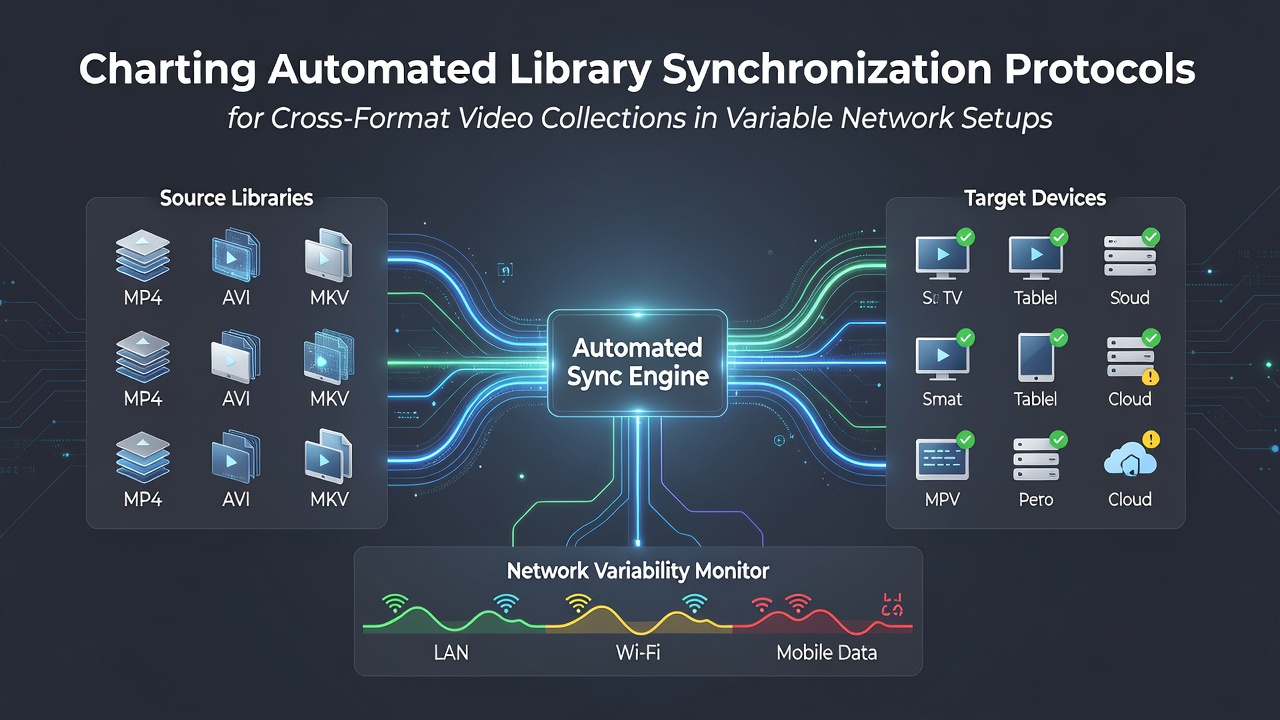
Charting Automated Library Synchronization Protocols for Cross-Format Video Collections in Variable Network Setups
Automated library synchronization protocols address the need to maintain consistency across video collections stored in diverse formats such as MKV, MP4, and AVI while operating over networks with fluctuating bandwidth and latency. These systems detect format discrepancies and apply conversion routines during transfer phases without requiring manual intervention from users.
Core Components of Synchronization Protocols
Protocols in this domain rely on metadata indexing combined with delta detection algorithms that compare file attributes including resolution, codec profiles, and subtitle tracks. Researchers at institutions including the University of Toronto have documented how such indexing reduces redundant transfers by up to 40 percent in multi-format repositories according to their 2025 network performance reports. The process begins with a central manifest file that catalogs each item then triggers selective updates when differences appear between source and target locations.
Variable network conditions introduce additional layers of complexity because connections may shift between wired gigabit links and mobile 5G or Wi-Fi 6 segments during a single session. Adaptive throttling mechanisms monitor packet loss rates and adjust chunk sizes accordingly while maintaining integrity checks through checksum verification at each stage. Observers note that protocols incorporating these adjustments sustain higher completion rates during peak usage periods compared to static transfer methods.
Handling Cross-Format Conversion During Sync
Format conversion occurs through embedded utilities that reference predefined compatibility matrices before initiating any re-encoding. When a collection contains both high-bitrate originals and compressed derivatives the protocol evaluates target device capabilities listed in user profiles then selects the appropriate output stream. Data from Canadian research clusters indicates that on-the-fly transcoding integrated into sync workflows cuts storage overhead by approximately 25 percent in household-scale deployments.
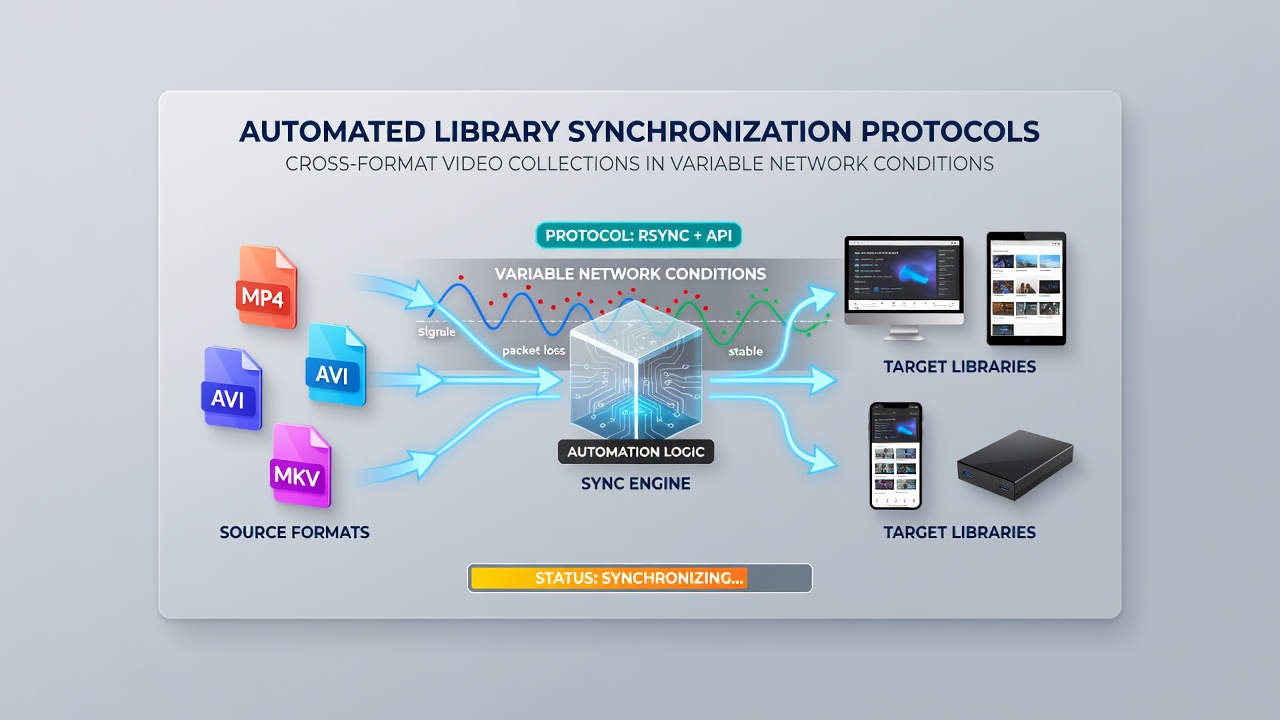
Those who manage extensive archives often encounter subtitle and chapter marker mismatches after conversion. Automated layers address this by extracting embedded metadata before rewrapping streams into new containers then reinserting the data at corresponding timestamps. Studies from Australian academic sources reveal that timestamp alignment accuracy reaches 98 percent when protocols enforce strict frame-rate normalization prior to final packaging.
Network Variability and Protocol Adaptations
Network setups ranging from stable enterprise LANs to intermittent satellite links demand protocols that incorporate resume capabilities and partial file recovery. When bandwidth drops below defined thresholds the system pauses active transfers and queues remaining segments for later execution once conditions improve. This approach prevents corruption that might otherwise occur during abrupt disconnections.
August 2026 saw several protocol updates released by open-source communities that introduced machine learning models for predicting network stability windows based on historical usage patterns. These models analyze time-of-day traffic data alongside regional infrastructure reports to schedule bulk synchronization tasks during optimal periods. Figures from European research consortia show measurable reductions in failed transfer attempts following the adoption of predictive scheduling.
Security considerations remain integral because synchronized collections frequently traverse public or semi-public pathways. Encryption standards such as TLS 1.3 combined with per-chunk authentication tokens protect content integrity while allowing verification without full decryption at intermediate nodes. Industry reports from North American technology alliances emphasize that layered authentication reduces exposure risks in shared library environments.
Implementation Examples Across Different Setups
One documented deployment involves a regional media archive that synchronizes collections between a primary server and multiple branch locations using a hybrid protocol stack. The system evaluates each incoming connection type then applies either block-level differencing for local networks or stream-based compression for remote links. Success metrics reported by the operators demonstrate consistent library parity across sites despite daily bandwidth fluctuations.
Another configuration appears in educational institutions where cross-format collections support both classroom playback and remote student access. Protocols here integrate with existing directory services to enforce access controls during sync operations while logging all format transformations for compliance auditing. Research published through university channels confirms that such logging adds negligible overhead yet provides traceability required by institutional policies.
Conclusion
Automated synchronization protocols continue to evolve in response to expanding format diversity and increasingly variable network environments. Integration of adaptive mechanisms, predictive scheduling, and format-aware conversion routines enables reliable maintenance of video collections without constant oversight. Ongoing developments tracked through academic and industry channels point toward further refinements that leverage emerging network diagnostics for even greater efficiency in future deployments.