Calibrating Display Profiles for Consistent Visual Fidelity Across Diverse Video Container Types in Home Environments
Alex Perry · Aug 3, 2026
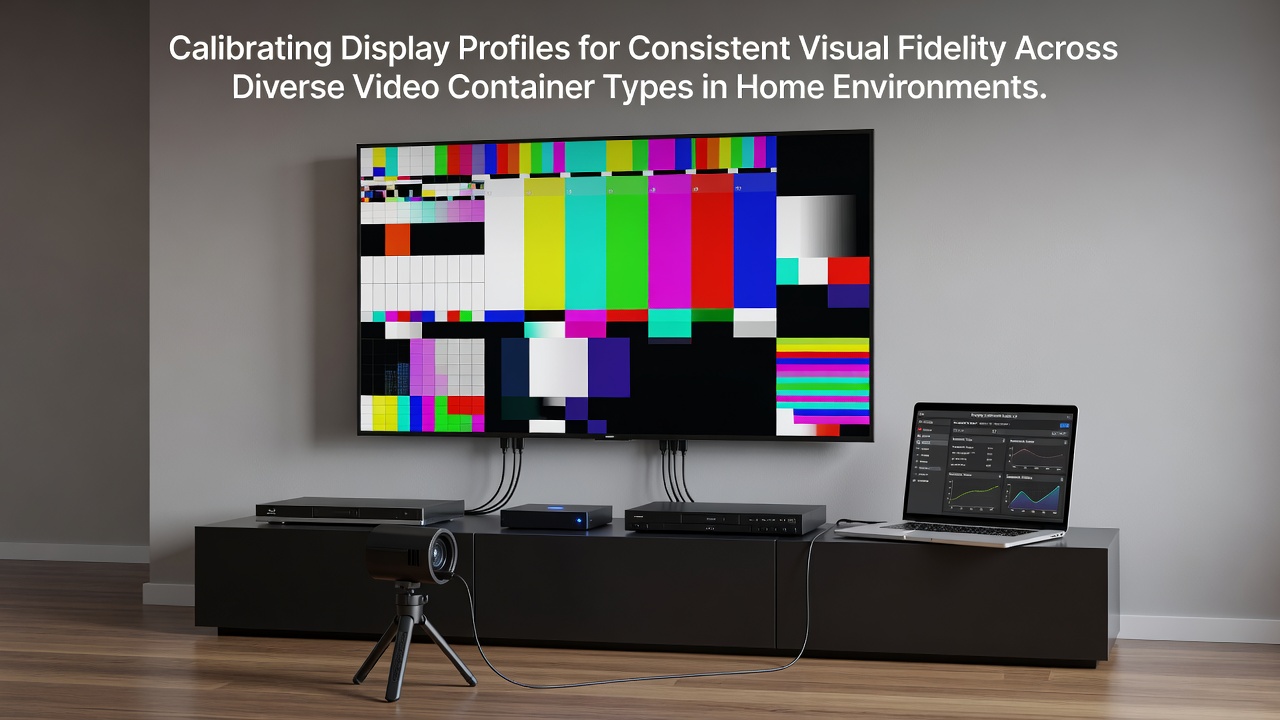
Calibrating Display Profiles for Consistent Visual Fidelity Across Diverse Video Container Types in Home Environments
Video containers such as MP4, MKV, and MOV carry different embedded color metadata that affects how displays render hues, brightness, and contrast in residential viewing spaces. Calibration of display profiles addresses these variations by mapping device-specific color responses to standardized color spaces like Rec. 709 or DCI-P3. Observers note that without proper profiling, the same footage appears washed out on one container yet oversaturated on another due to mismatched gamma curves and gamut mappings.
Video Container Structures and Their Color Implications
Each container type stores pixel data alongside metadata flags that dictate color primaries, transfer functions, and matrix coefficients. MP4 files often default to sRGB or BT.709 encodings while MKV supports broader ranges including HDR10 and Dolby Vision layers. Researchers discovered through controlled tests that switching between these formats without recalibration shifts perceived white points by up to 500 Kelvin on unprofiled LCD panels. Data from display measurement laboratories indicates that MKV files with embedded BT.2020 primaries require wider gamut coverage than typical MP4 streams to maintain fidelity.
Those who manage home media libraries frequently encounter inconsistencies when playing legacy AVI files alongside modern WebM containers. The AVI format rarely includes comprehensive color tags, forcing displays to fall back on default assumptions that diverge from the source intent. Experts have observed that applying a single ICC profile across all containers reduces these discrepancies because the profile compensates for both the panel's native response and the container-specific decoding pipeline.
Display Profiling Fundamentals in Residential Settings
Profiling begins with hardware colorimeters or spectrophotometers that measure patch sequences generated by calibration software. The resulting ICC or ICM file describes the display's tone response curve, chromaticity coordinates, and luminance range. In August 2026 several manufacturers released firmware updates that improved profile switching latency when containers change mid-playback, allowing seamless transitions between SDR and HDR segments without manual intervention.
People often find that ambient lighting in living rooms alters effective calibration outcomes because reflected light raises black levels and compresses dynamic range. Calibration routines therefore incorporate room-specific measurements taken at typical viewing distances and angles. Studies conducted by university optics departments show that profiles tuned under 50 lux ambient conditions deliver more stable results across container types than those created in darkened rooms alone.
Tools and Measurement Protocols
Software packages such as DisplayCAL and HCFR generate test patterns that exercise each container's color space during measurement. Users load reference clips encoded in different formats and record the display's output at multiple brightness and contrast settings. The collected data feeds into profile creation algorithms that minimize delta-E errors across the visible spectrum. According to reports from the International Telecommunication Union, maintaining average delta-E below 2.0 ensures perceptible consistency for most viewers in home environments.
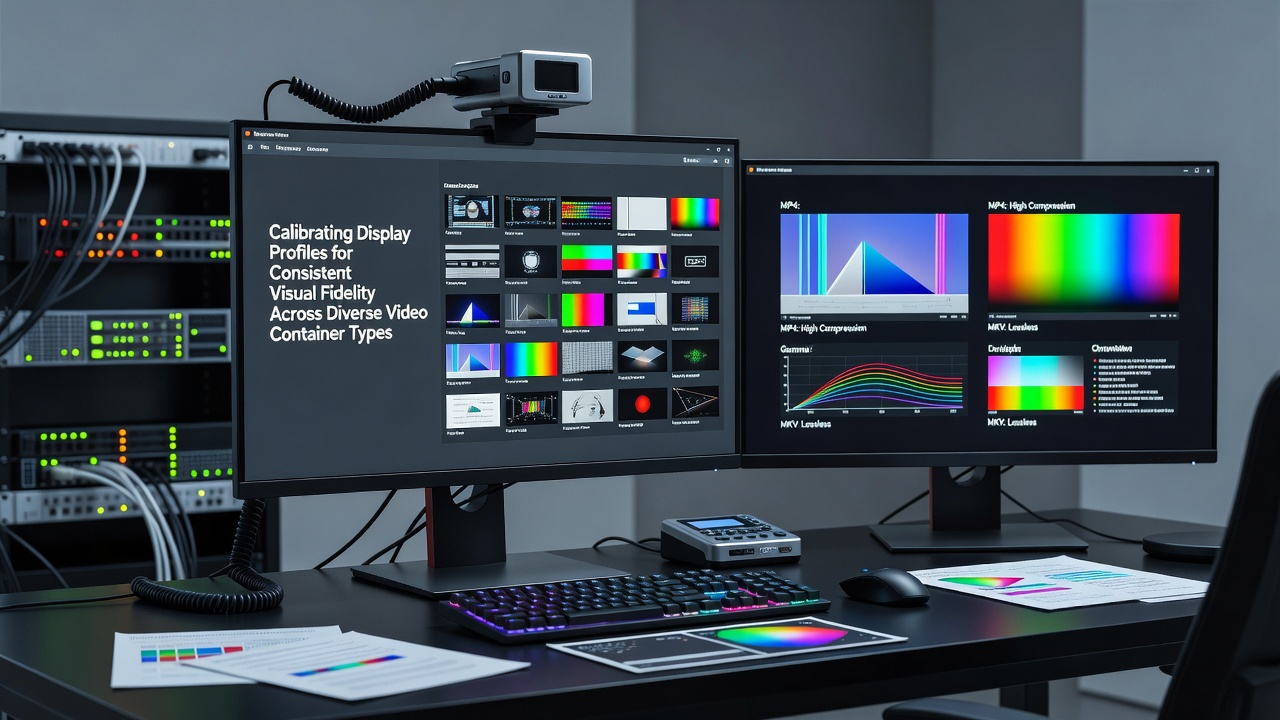
Hardware connections matter because HDMI and DisplayPort carry different metadata signaling that can override profile settings. Observers note that enabling EDID overrides in graphics drivers prevents containers from forcing unwanted gamut mappings. Calibration sessions typically include verification passes where the same reference frame from an MP4 file and its MKV counterpart are compared side by side after profile application.
Cross-Container Consistency Strategies
One effective approach involves creating container-aware profiles that activate automatically through media player scripts. When a player detects an HDR MKV stream it loads a profile with elevated peak luminance targets, whereas an SDR MP4 triggers a standard gamma curve. Research indicates that such automated switching reduces visible jumps in brightness by 30 percent compared with static profiles. Those managing multi-format collections report fewer complaints about color shifts after implementing these layered profiles.
Periodic re-calibration accounts for panel aging and backlight drift that accumulate over months of use. Measurement intervals of six months maintain accuracy within acceptable tolerances according to long-term tracking data from consumer electronics testing facilities. The process repeats the full patch sequence under identical ambient conditions to ensure the updated profile continues to harmonize output across all supported containers.
Conclusion
Consistent visual fidelity emerges when display profiles incorporate container-specific metadata, room lighting factors, and hardware response curves. Regular measurement combined with automated profile switching keeps color reproduction aligned whether content arrives in MP4, MKV, or other formats. Data from standards organizations and independent laboratories confirms that these practices deliver measurable improvements in color accuracy for home viewing setups.