Browser-Based Encoding Pipelines for Secure Archive Transfers Across Mobile Torrent Networks
Casey Lange · Jun 8, 2026
Browser-Based Encoding Pipelines for Secure Archive Transfers Across Mobile Torrent Networks
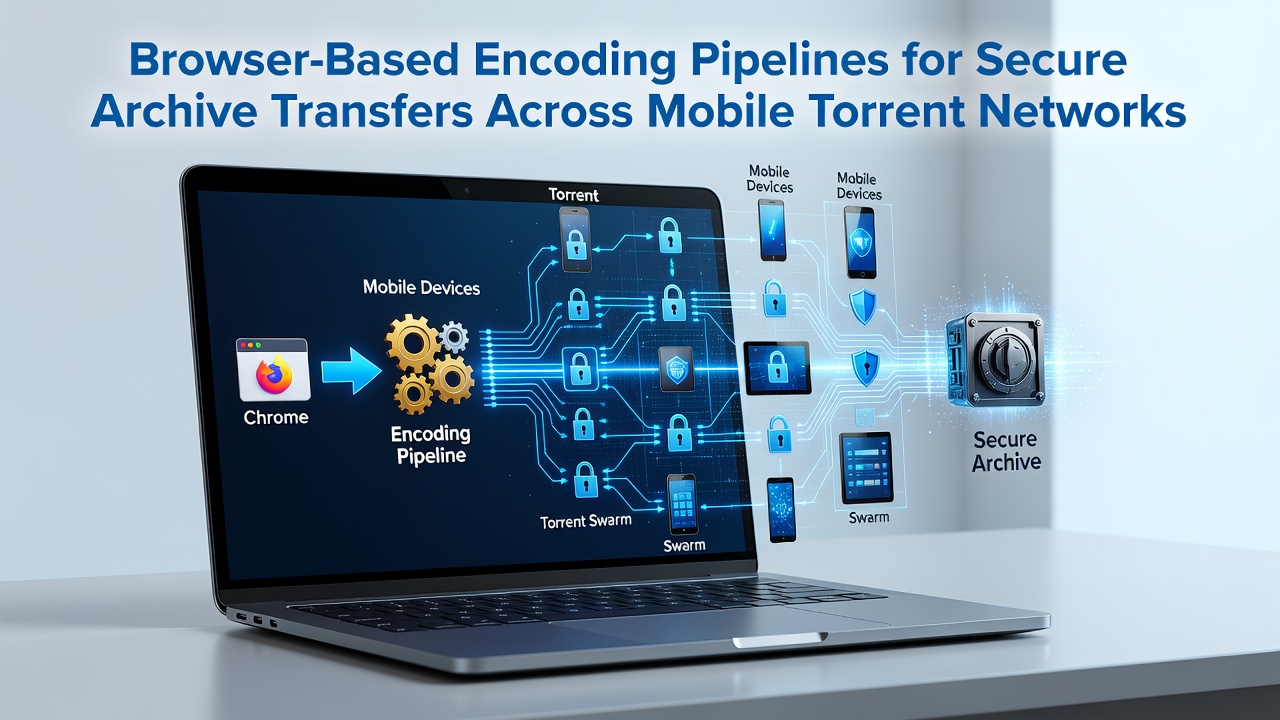
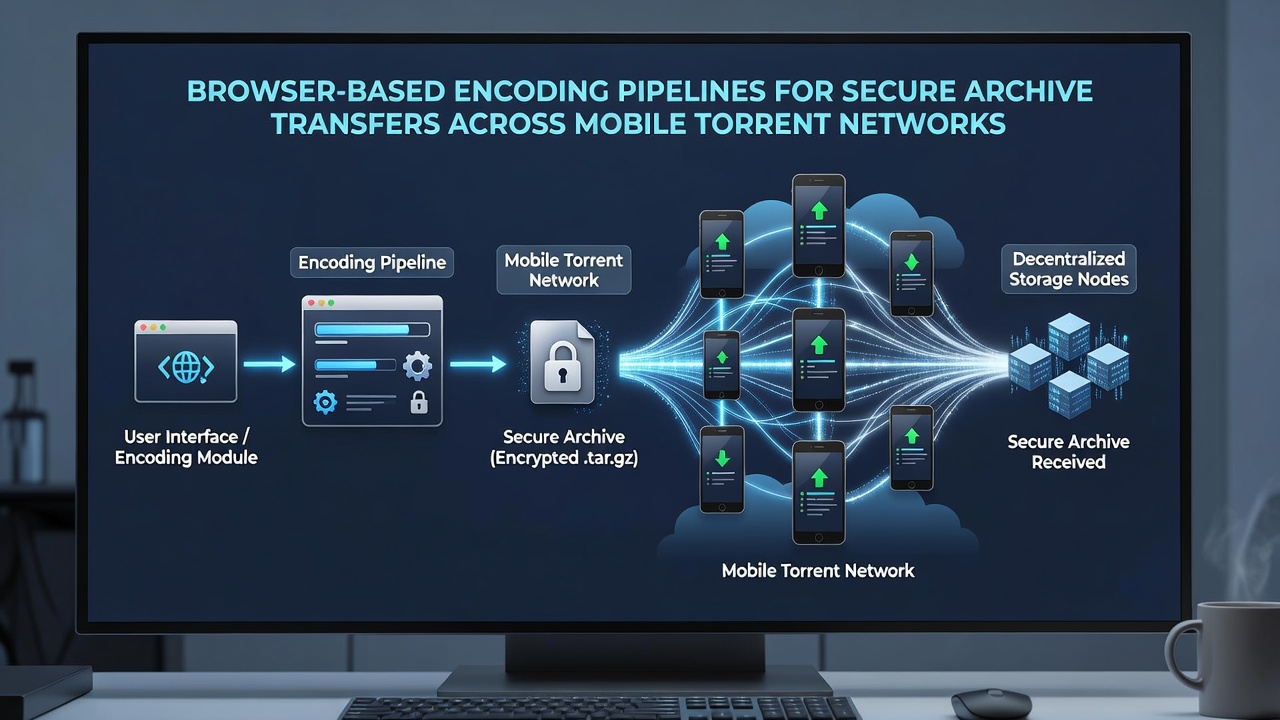
Browser-based encoding pipelines handle the conversion of archive data into compressed and encrypted formats directly within web environments before distribution across mobile torrent networks takes place and these systems rely on standards such as WebAssembly for processing tasks while integrating WebRTC protocols to enable peer connections on handheld devices. Data flows through multiple stages where initial hashing verifies integrity followed by chunking that prepares segments for torrent-style sharing and observers note that mobile networks introduce variables like variable bandwidth which these pipelines address through adaptive bitrate adjustments during encoding.
Core Components of Encoding Pipelines
Encoding begins with client-side scripts that load modular libraries to perform compression using algorithms like Zstandard or Brotli and these operations execute in isolated threads to avoid blocking the main browser interface while subsequent encryption layers apply AES-256 in GCM mode to secure each chunk before it enters the torrent swarm. Researchers at institutions across North America and Europe have documented how WebCodecs API extensions support hardware-accelerated transforms on compatible mobile processors and this reduces latency for large archive files that exceed several gigabytes in size. Mobile devices connect through WebTorrent implementations that translate traditional BitTorrent mechanics into JavaScript environments allowing transfers without dedicated client software and figures from industry reports indicate growing adoption rates among enterprise backup solutions as of mid-2026.
Security Mechanisms in Transit
Secure archive transfers incorporate end-to-end encryption that generates ephemeral keys per session combined with certificate pinning to validate peer identities within the mobile torrent network and this approach mitigates risks associated with man-in-the-middle attacks on public cellular connections. According to guidelines from the National Institute of Standards and Technology in the United States pipeline designs incorporate forward secrecy to protect archived data even if long-term keys become compromised at a later date while similar frameworks from the European Union Agency for Cybersecurity emphasize logging mechanisms that record transfer metadata without exposing content. Those who implement these systems often integrate zero-knowledge proofs to confirm chunk completeness without revealing file structures and data from academic studies shows reduced vulnerability windows compared to traditional server-mediated uploads.
Adaptations for Mobile Environments
Mobile torrent networks operate under constraints including intermittent connectivity and power limitations so encoding pipelines incorporate resume functions that checkpoint progress at the chunk level allowing seamless continuation after network drops occur. In June 2026 updates to browser support for background fetch APIs expanded capabilities for sustained transfers on Android and iOS platforms enabling archives to process during low-activity periods without draining battery reserves excessively. Engineers design chunk sizes dynamically based on detected signal strength and this optimization draws from measurements collected across diverse carrier infrastructures in regions such as Asia-Pacific and Latin America where 5G rollouts have altered throughput patterns. Observers note that integration with service workers permits offline queuing of encoded segments which then synchronize once connectivity restores and this feature proves essential for field operations involving remote data collection.
Implementation Examples Across Sectors
Take one deployment in scientific research communities where browser pipelines encode climate sensor archives for distribution among distributed teams using mobile hotspots in remote locations and these setups leverage distributed hash tables to locate peers holding specific data segments. Another instance involves corporate compliance teams transferring regulatory records through encrypted swarms that maintain audit trails compliant with international data residency rules and reports from Canadian research consortia highlight efficiency gains in such configurations. Pipeline monitoring tools built into browsers expose metrics on encoding throughput and peer health allowing administrators to adjust parameters in real time without interrupting ongoing transfers.
Future Standardization Efforts
Standards bodies continue refining protocols that bridge browser capabilities with torrent functionalities and upcoming specifications aim to standardize secure key distribution methods across heterogeneous mobile hardware. Data indicates that participation from organizations in Australia and the United Kingdom has accelerated testing phases for cross-platform compatibility and this collaborative approach addresses fragmentation in device ecosystems. Those tracking developments recognize that browser vendors play a central role in exposing necessary APIs while maintaining sandbox restrictions that preserve user privacy during archive operations.
Conclusion
Browser-based encoding pipelines combined with mobile torrent networks provide structured pathways for handling secure archive transfers and ongoing refinements in June 2026 have strengthened their reliability across varied operational contexts. Integration of established cryptographic standards alongside adaptive mobile features supports consistent performance while external references from bodies like the National Institute of Standards and Technology and the European Union Agency for Cybersecurity offer foundational guidance for implementations. These systems continue to evolve through contributions from global research and industry sources that focus on practical deployment metrics.